

A memorable 1300 number won’t help if customer calls reach the wrong phone or go unanswered as your team grows. Choosing a 1300 number provider Australia businesses can rely on means looking beyond the number itself to how calls are routed, managed and connected to your phone system.
It’s easy to confuse 1300 numbers with 1800 numbers or standard business numbers. A 1300 number is a shared-cost option, while calls to 1800 numbers are free for callers. Businesses hold rights to use a 1300 number rather than owning it outright, and number portability can help you keep it when changing providers.
This guide explains how callers reach your business through a 1300 number and what to compare when choosing a provider, from call handling and ongoing charges to portability and system compatibility. You’ll also see how a 1300 number can work alongside cloud VoIP, SIP trunking and internet redundancy to support a more dependable communications setup. The goal is to help you choose an arrangement that keeps customer calls moving as your business changes.
Key Takeaways
- A 1300 number gives callers a national business contact point, with calls routed to the answer points your business nominates.
- When comparing a 1300 number provider australia businesses can use, look beyond the number to portability, call handling, support, system integration and clear billing.
- Separate essential routing needs, such as business-hours handling and overflow, from optional features like call recording and reporting.
- Prepare for setup by mapping callers, call destinations, operating hours and overflow scenarios before implementation.
- Aligning business numbers with cloud VoIP and SIP trunking can help create a more connected phone setup. A telecommunications audit can clarify call-flow and continuity requirements.
What Is an Australian 1300 Number, and What Does a Provider Do?
A 1300 number gives a business one national contact number for callers across Australia. It’s a non-geographic number, so it isn’t tied to a particular town or a separate physical phone line. The number acts as a memorable front door. Behind it, calls can be directed to configured phones or teams according to the business’s call-handling arrangements.
A 1300 number provider arranges access to the number and connects it with the business’s nominated call destinations and phone service. This can bring number routing and the wider business phone system together, giving callers a clear way to reach the team. For context on how these numbers fit into the national numbering system, see Telephone numbers in Australia.
How does a 1300 number work for callers and businesses?
A caller dials the 1300 number as they would any other phone number. The call then follows the routing configured for the business, which may direct it to a nominated phone or team. This provides a consistent public contact point even if the people answering calls are in different locations.
Charges depend on the caller’s service and plan, as well as the business’s provider terms. Calls from Australian landlines are generally charged at a local-call rate, while mobile charges depend on the caller’s plan. Many current mobile plans include calls to 1300 numbers in their standard allowance. The business may also have charges under its service terms, so check how call costs are handled rather than assuming the number itself is cost-free.
How is a 1300 number different from an 1800 number?
Both numbers offer a national point of contact, but their caller-cost models differ. A 1300 number is a shared-cost option: callers may pay a charge depending on how they call, and the business pays according to its service terms. An 1800 number is positioned as toll-free for callers from Australian landlines and mobiles, with the business bearing the call cost.
That difference can shape how a business presents its contact options. A 1300 number may suit a business seeking a recognisable national number with shared call costs. An 1800 number may better fit a goal of removing call charges for customers. The right choice depends on your audience, expected call patterns and budget. A 1300 number provider Australia businesses rely on should explain the number’s call routing and cost arrangements as part of the broader phone setup.
What Should a 1300 Number Provider Offer Beyond the Number?
The number is only the entry point. Useful call handling determines whether a customer reaches the right person, what happens when the team is busy and where calls go outside normal operating hours. A 1300 number provider Australia businesses choose should help connect these decisions with the phone system, rather than treating the number as a standalone service.
Which call-handling features make a business number more useful?
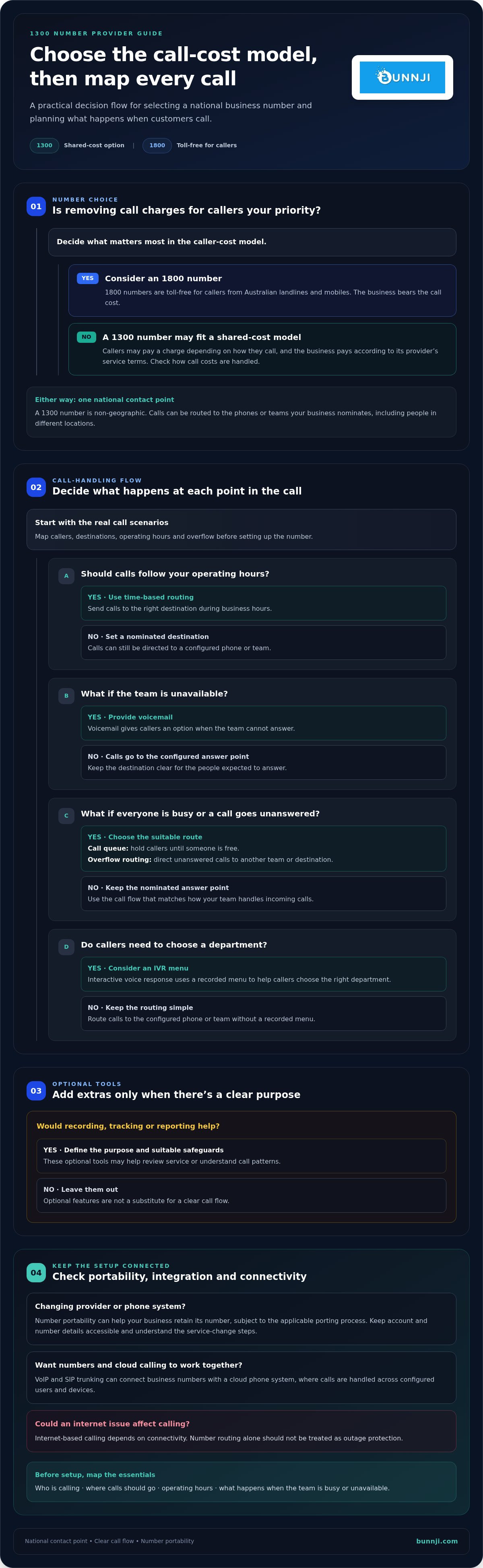
Match features to real call scenarios. Time-based routing can send calls to the right destination during business hours, while voicemail can provide an option when the team is unavailable. A call queue can hold callers until someone is free, and overflow routing can direct unanswered calls to another team or destination. An IVR, or interactive voice response, uses a recorded menu to help callers choose the right department.
Start with the essentials your callers need. Recording, call tracking and reporting may help with reviewing service or understanding call patterns, but they’re optional tools, not substitutes for a clear call flow. Define their purpose and suitable safeguards before enabling them. The Australian Communications and Media Authority explains how business numbers are regulated, while your service terms set out the features and arrangements for your setup.
Why do portability and phone-system integration matter?
Number portability means a business can retain its number when changing providers, subject to the applicable porting process. That flexibility matters because a public-facing number can become part of customer communications over time. Keep account and number details accessible, and understand the steps involved in a service change before you need to make one.
Integration matters just as much. VoIP and SIP trunking can connect business numbers with a cloud phone system, where calls can be handled across configured users and devices. The wider setup also depends on connectivity: an internet issue can affect internet-based calling, so number routing alone shouldn’t be treated as outage protection.
Keeping control of your number and planning its call routing supports business continuity as your team or phone system changes. For broader context on building a connected setup, read this Australian business VoIP strategy guide. Bunnji helps businesses align numbers, SIP trunking and cloud VoIP, with telecommunications audits that can clarify existing call flows and system dependencies.
For more on how numbers fit into a wider communications setup, explore Bunnji’s business phone systems.
How to Compare 1300 Number Providers in Australia
A useful comparison goes beyond the advertised feature list. Look at your rights to use the number, what happens if you change services and whether call handling fits your customers and team. A 1300 number provider Australia businesses can work with over the long term should make the service terms, billing and system dependencies clear.
| What to compare | What to look for | Why it matters |
|---|---|---|
| Number control and portability | Clear information about your rights to use the number, account access and the steps involved in porting it. | Businesses hold rights to use a 1300 number rather than owning it outright. Portability can help you retain it when changing services. |
| Routing and call handling | Options that match your business hours, teams, overflow needs and likely caller journeys. | Callers should have a clear path to the right person, including when the usual destination is busy or unavailable. |
| Service terms and billing | A clear breakdown of included services, usage charges, optional features and how changes affect billing. | Transparent terms make it easier to understand ongoing costs and avoid surprises as call volumes or needs change. |
| Support and service changes | Defined processes for faults, account changes, routing updates and number porting. | Knowing how routine changes and service issues are handled helps you plan and manage the number. |
| Phone-system integration | A practical fit with your existing or planned cloud phone system, VoIP or SIP trunking. | Integration can reduce disconnected services and make call handling easier to manage. |
Which provider criteria deserve the closest attention?
Start with number control, portability procedures and service terms. Check how you access call records and whether routing can reflect real customer journeys, such as directing sales and support enquiries to separate teams. Consider how the setup can adapt when you add staff, change operating hours or experience a rise in demand. Compare support and fault-handling processes alongside feature inclusions, not as an afterthought.
How should you assess reliability and day-to-day usability?
Trace the full call path. If your calls rely on VoIP, identify the internet connection and phone system involved, then consider what happens during a connectivity disruption. Backup connectivity and recovery arrangements may matter for business-critical calls. A telecommunications audit can help map dependencies and highlight continuity needs.
A memorable number still depends on reliable call delivery. Automation may suit some call journeys, but it should solve a clear need rather than add complexity. Explore the AI voice agents trend report for context on where automated call handling may fit in an Australian business communications plan.
How to Prepare Your Business for a 1300 Number Setup
A smooth setup starts with your callers, not the phone settings. Before choosing a 1300 number provider Australia businesses can use, document how people contact your team now and decide what should happen to each call. This gives you a practical call-flow plan for configuring the number and coordinating a changeover.
What information should you map before setup?
Work through these four steps with the people who answer calls and manage your phone system:
- Map callers and call reasons. List common enquiries, such as sales, bookings or support, and note whether callers need different teams or destinations.
- Set out destinations and answer points. Record the departments, team members and phones that should receive calls. Include the preferred destination for each type of enquiry.
- Define hours and busy periods. Document normal business hours, any different schedules and times when call volumes typically rise. Decide what callers should hear or where calls should go outside those hours.
- Plan overflow and unanswered calls. Choose what should happen if a team is busy or a call isn’t answered, such as directing it to another answer point or voicemail.
Also record your current public numbers and any services or phone-system settings connected to them. Note dependencies such as internet-based calling, existing routing and staff who rely on particular lines. A clear inventory helps identify what needs to remain available during the transition.
How can you plan a smooth transition?
Coordinate the work so the number, routing and people are ready together. First, agree on the call-flow plan and configure the intended destinations. Next, test each caller journey before communicating the change to staff. Make sure the team knows how calls will arrive and what to do if a call reaches the wrong place.
Test the number from different devices and follow each route: business hours, out-of-hours, busy team and unanswered call. Check that every intended destination rings as expected and that voicemail or overflow behaves as planned. If the change involves porting an existing number, include the porting steps and timing in the changeover plan to reduce the risk of disruption.
Finally, write down escalation and backup steps for phone-system or internet interruptions. A 1300 number doesn’t by itself prevent an outage, so include who should respond and how essential calls can be handled if the usual setup is unavailable. Clear call-flow notes turn setup decisions into a plan your team can follow.
For help planning your number, call handling and phone system together, explore business communications with Bunnji.
How Bunnji Connects Business Numbers with Cloud VoIP
A business number works best as part of a considered communications setup. Bunnji brings together business numbers, cloud phone systems and SIP trunking to help Australian businesses plan how calls enter the system and reach their teams. The right arrangement depends on your existing phone services, customer call flows and how your people need to answer calls.
What does an integrated business phone setup bring together?
A business number gives callers a consistent point of contact. Cloud VoIP provides the phone system that manages calls, while SIP trunking connects compatible phone systems to voice services. Together, these components can support a clearer way to organise incoming calls and manage the system. Depending on the configuration, team members may be able to handle calls across connected devices, helping the business adapt as people or work locations change.
The aim isn’t to add features for their own sake. It’s to make call handling easier to understand and administer. A telecommunications audit can help establish how calls currently move through the business, identify service costs and reveal dependencies between phone systems and connectivity. That gives you a stronger basis for deciding what to retain, improve or connect.
When should a business review its communications setup?
Review the setup if customers struggle to reach the right team, calls are being missed, staff numbers have changed or existing phone arrangements are difficult to manage. Map the call journey from the public number to the person or team answering. Then consider how that journey changes during busy periods, outside business hours and when a system or internet connection is unavailable.
Internet redundancy is a separate part of reliable VoIP planning. A 1300 number doesn’t prevent an internet outage, and internet-based calling may depend on the connection supporting the phone system. Reviewing backup connectivity and recovery steps can help clarify how essential calls could be handled during an interruption. Bunnji advises on business connectivity and internet redundancy as part of a wider communications plan.
Choosing a 1300 number provider Australia businesses can work with means considering the number alongside its call routing, phone system and connectivity dependencies. Bunnji’s telecommunications audits can help bring those moving parts into view, including existing call flows and costs, so you can plan around your requirements.
Ready to map your business calling needs? Talk with Bunnji about aligning your business numbers, cloud VoIP and connectivity into a communications setup that fits your team.
Build a Business Phone Setup That Can Grow With You
Choosing a 1300 number provider australia businesses can rely on means looking beyond the number. Clear routing, manageable service terms, number portability and a phone system that fits your team all matter. Mapping callers, answer points, business hours and overflow needs before setup gives you a practical foundation for reliable call handling.
A 1300 number works best as part of a connected communications plan. Bunnji provides cloud VoIP and SIP trunking for business communications, alongside telecommunications audits to help clarify call flows, costs and system dependencies. Internet redundancy guidance can also help you plan for connectivity interruptions, without treating the number itself as outage protection.
Ready to bring your business numbers, call handling and phone system into one considered plan? Plan a connected business phone system with Bunnji. With a clear view of your needs, you can make confident choices and give your team a stronger foundation for every customer call.
Frequently Asked Questions
What does a 1300 number provider do?
A 1300 number provider arranges access to a business number and helps connect it to nominated call destinations. A 1300 number provider Australia businesses choose may also help align routing with a cloud phone system, depending on the service. Before selecting a setup, consider where calls should go, what happens when a team is busy and how service terms explain number control, portability and billing.
How much does a 1300 number cost in Australia?
The cost depends on the provider’s plan, call volumes, included services and optional features. The business may pay a hosting charge and, depending on the service terms, charges for incoming calls or additional features. Callers may also pay, depending on whether they call from a landline or mobile and on their plan. Compare the full terms and inclusions rather than judging a service by one advertised charge.
Can a small business get a 1300 number?
Yes. A small business can use a 1300 number as a national point of contact and route incoming calls to its chosen answer points. The important step is matching the call flow to the team’s capacity. For example, decide who answers during business hours, where calls go when that person is unavailable and how the arrangement could adapt if the business grows.
Can I keep my 1300 number if I change providers?
Yes, number portability allows a business to retain its 1300 number when changing providers, subject to the applicable porting process. Businesses hold rights to use a 1300 number rather than owning it outright. Plan the changeover, keep account and number details accessible, and coordinate timing and routing so staff know how calls will be handled during the transition.
What is the difference between a 1300 and an 1800 number?
A 1300 number is generally a shared-cost option, while an 1800 number is toll-free for callers from Australian landlines and mobiles, with the business bearing the call cost. The amount a 1300 caller pays can depend on their service and plan, particularly for mobile calls. Consider your audience, call-handling goals and the costs covered by your business’s service terms before choosing.
Can a 1300 number ring multiple phones or locations?
A 1300 number can be routed to nominated phones or teams, and a business may configure calls to reach multiple answer points. The available call flow depends on the service and phone-system setup. You might direct sales calls to one team and support calls to another, or define an overflow destination if the first team is busy. Map these scenarios before configuring routing.
Does a 1300 number work with a VoIP phone system?
Yes, a 1300 number can form part of a business phone setup that uses VoIP, depending on how the number and system are connected. Cloud VoIP and SIP trunking can support business calling across configured users and devices. Plan the call routing and consider the internet connection the system relies on. A telecommunications audit can help clarify call flows and dependencies.


